
11 Fun and Interactive Math Activities to Boost Early Learning and Confidence
Mathematics can sometimes feel intimidating for young learners, but with the right approach, it can be an exciting and enjoyable subject. By incorporating engaging math activities, hands-on learning techniques, and fun math games for kids, you can help children develop a love for numbers and problem-solving. Here are some interactive math lessons and strategies to make learning math an enjoyable experience for kids.
1. Incorporate Math into Everyday Activities
The best way to teach math is to integrate it into daily life. Early math education becomes more effective when children see math in action.
Cooking and Baking: Measuring ingredients teach fractions, addition, and multiplication.
Shopping Trips: Have kids count money, calculate change, and compare prices to improve their math skills development.
Telling Time: Use clocks and schedules to introduce time management and elapsed time.
2. Use Hands-On Math Manipulatives
Young children learn best through play-based learning math techniques. Using math manipulatives for kids helps them grasp abstract concepts.
Counting Bears or Beads: Helps children visualize numbers and patterns.
Base Ten Blocks: Teach place value and addition/subtraction with regrouping.
Geoboards: Introduce geometry concepts like shapes, angles, and sym
3. Make Math Fun with Games
Educational math games provide an exciting way to reinforce learning. Whether through board games, card games, or online apps, children can develop strong math skills while having fun.
Board Games: Games like Monopoly teach money management, while Snakes and Ladders reinforce counting skills.
Card Games, such as War (modified for addition/multiplication), Uno (number recognition), and Memory Match (number pairs), make learning fun.
Dice Games: Roll dice and practice addition, subtraction, or multiplication with the numbers rolled.
4. Leverage Technology and Interactive Apps
Incorporating digital learning tools can make math more engaging. These interactive math lessons cater to different learning styles.
Khan Academy Kids: Offers interactive lessons and exercises.
Prodigy Math Game: A fantasy-based math game for kids that promotes problem-solving.
Math Playground: Features puzzles, logic games, and problem-solving challenges.
5. Use Story Problems and Math Journals
Connecting math with storytelling makes it more relatable and memorable.
Story-Based Word Problems: To introduce problem-solving, create real-life scenarios, such as superheroes sharing toys or animals at a zoo.
Math Journals: Encourage kids to write or draw how they solve problems, improving their reasoning skills.
6. Story-Based Word Problems: Create real-life scenarios, like superheroes sharing toys or animals at a zoo, to introduce problem-solving.
Math Journals: Encourage kids to write or draw how they solve problems, improving their reasoning skills. Taking math outside the classroom keeps children active and engaged.
Scavenger Hunts: Find objects of different shapes or count nature items.
Sidewalk Chalk Math: Draw number lines, shapes, and equations for kids to solve.
Jump Rope Counting: Reinforce multiplication by skipping and counting in multiples..
7. Use Songs, Rhymes, and Movement
Music and movement can boost retention and make learning fun.
Skip Counting Songs: Help kids memorize multiplication tables.
Number Rhymes: Use classics like “Five Little Monkeys” or “Ten in the Bed” to introduce early math skills.
Dance and Math: Encourage movement-based learning, such as forming shapes with their bodies.
8. Encourage Group Work and Peer Learning
Collaborative learning fosters engagement and helps children learn from each other.
Buddy Math: Pair students to solve problems together.
Math Stations: Rotate between different hands-on activities.
Group Challenges: Engage in problem-solving tasks that require teamwork.
9. Blend Math with Art and Creativity
Creative math activities help children visualize concepts.
Tessellations and Symmetry Drawings: Teach geometric patterns.
Origami: Demonstrates fractions and spatial reasoning.
Graphing Art: Create coordinate grid pictures.
10. Relate Math to Real-World Problem Solving
Showing kids how math applies to real life increases their motivation.
Building Projects: Use measurement and estimation to construct objects.
Budgeting Activities: Give children pretend money and ask them to budget for items.
Weather Tracking: Record temperatures and compare trends over time.
11. Role-Playing and Storytelling for Math Learning
Music and movement can boost retention and make learning fun.
Play Store: Teach money counting and addition while acting as cashiers and customers.
Engineer for a Day: Build structures with blocks while discussing measurements.
Doctor's Office: Measure heights, and weights, and use charts to understand data collection.
By using engaging math activities, hands-on tools, and fun math games for kids, you can turn math into an exciting subject. Whether through interactive math lessons, technology, or storytelling, young learners can build confidence and a strong foundation in math. Making math fun and relatable is key to ensuring children develop a lifelong love for numbers and problem-solving.
What are your favorite creative math activities for kids? Share your ideas in the comments below!


Meet Teacher Mala
I was born in Manila, Philippines but raised in Manila, Jakarta, and Singapore.When I was young, I hated teaching but now, I am a very passionate teacher. I have a gift for handling children. I can train any child to excel in school. My calling is to help parents train their children to be focused, responsible, and independent. I want to make a difference in children's lives.
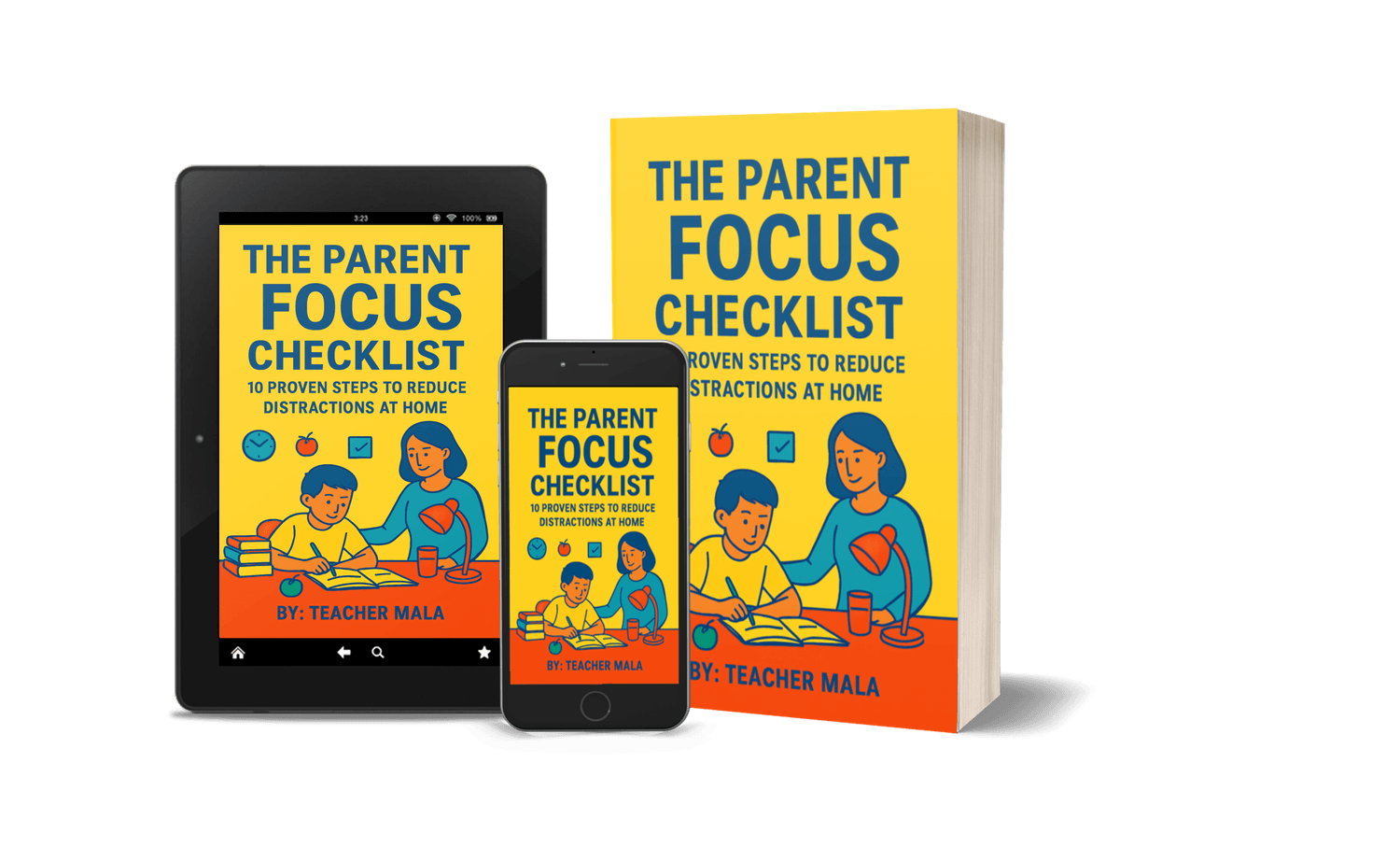
Get Your Free Parent Focus Checklist
Don’t let distractions hold your child back.
Sign up to receive your free Focus Checklist for Parents, plus gentle, practical parenting tips straight to your inbox, your step-by-step guide to raising a focused, confident, and successful child.

This site is not part of the Facebook website or Facebook Inc., and Facebook does NOT endorse it in any way. Facebook is a trademark of Facebook, Inc.
We use cookies to ensure you get the best user experience from this website.
DISCLAIMER: The information provided in the Parent Focus Checklist and on this website is for educational purposes only. Every child is unique, and results may vary depending on individual learning styles, effort, and consistency at home. While the strategies shared have helped many children improve focus and study habits, we do not guarantee specific academic results.
This resource is not a substitute for professional educational, psychological, or medical advice. Parents should use their own judgment and, when necessary, consult with qualified professionals regarding their child’s specific needs.
By using this checklist, you acknowledge that your child’s progress will depend on several factors, including but not limited to your involvement, your child’s effort, and consistency in applying the strategies.
Teacher Mala © 2025. All Rights Reserved